
Engineered control at equipment surfaces
Physics-Based Water Treatment for Cooling Towers, Chillers & Boilers
An engineered equipment-conditioning program designed to manage mineral adhesion, electrochemical corrosion, suspended solids, and biological activity where heat transfer happens.
- Controlled electrical circuit
- Application-specific component design
- Monitored service program
The engineering problem
Heat-transfer performance is a surface-condition problem.
Mineral deposits and biofilm add thermal resistance at the exact interface where energy must move. Corrosion removes metal, releases debris, creates under-deposit cells, and shortens pressure-boundary life. Each mechanism can alter flow, pressure drop, approach temperature, and maintenance frequency.
Scale Free Systems is applied to the equipment and circulating system where those mechanisms occur. It is not a softener, magnet, passive external coil, or generic device selected without review of hydraulics, water quality, materials, load, and operating sequence.
Mechanism of action
Three controlled mechanisms. One equipment-protection strategy.
Final configuration is established from the system analysis. Not every application uses every component, and performance criteria are defined for the installed scope.
Mineral Adhesion Control
The controller establishes a controlled electrical circuit intended to manage surface potential in connected equipment. The objective is to reduce the attraction that permits precipitated mineral solids to plate onto heat-transfer surfaces, allowing solids to remain in the bulk water for filtration or blowdown removal.
Read Technical Overview →Electrochemical Corrosion Control
Corrosion requires anodic and cathodic sites, an electrolyte, and an electrical path. SFS is configured to control electrical activity associated with this circuit and reduce conditions that accelerate metal loss. Performance is evaluated from equipment observations and corrosion data when included.
Read Technical Overview →Biological Activity Control
Where required, the selected configuration can incorporate timed copper-silver ion release and related conditioning. Biological-control scope is coordinated with site testing, operating conditions, and the facility water-management program.
Read Technical Overview →System architecture
Components selected around the application—not sold as a one-size-fits-all box.
The basis of design identifies which control, conditioning, monitoring, filtration, conductivity, and biological-control functions are required.
System Controller
Provides continuous equipment conditioning, system-status indication, and the control platform for the selected application configuration.
Conditioning & Grounding Network
Connects the controller to protected equipment and establishes the designed electrical relationship across system components.
Conductivity & Blowdown Integration
Coordinates mineral concentration and solids discharge with the cooling-tower operating sequence when conductivity control is included.
Filtration & Solids Management
Removes suspended mineral particles and system debris so material released into the bulk water can be separated from circulation.
Biological-Control Module
Adds controlled copper-silver ion release or other specified components when biological-control requirements are part of the approved design.
Monitoring & Service Verification
Uses status indicators, water testing, operating data, and scheduled reviews to confirm that the installed program is operating as designed.
Basis-of-design inputs
What an engineer should provide before the system is selected.
A credible submittal begins with actual system data. These inputs establish application boundaries, component selection, the operating sequence, and the post-installation verification plan.
Final scope must be coordinated with the facility water-management plan, equipment-manufacturer requirements, safety requirements, and applicable codes.
Control philosophy
Equipment conditioning changes the control point.
Conventional programs primarily control circulating-water chemistry. SFS adds a physical and electrical control layer at the equipment surfaces where scale adhesion, corrosion, and biological fouling affect heat transfer and asset life.
Compare Your Current Program →
Equipment applications
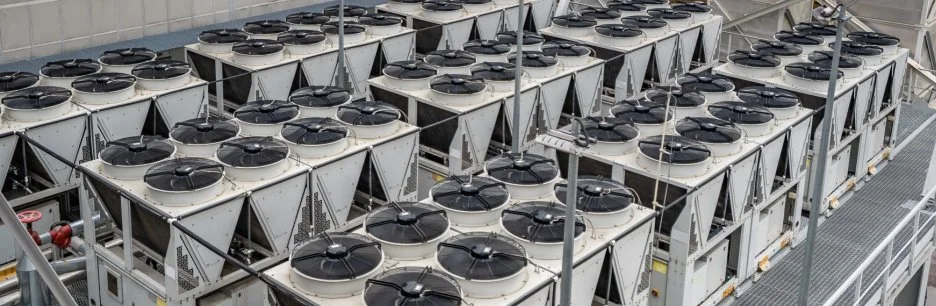
We Treat Heat-Transfer Equipment—Not the Water.
Suitability and final component selection depend on system configuration, materials, water source, operating temperatures, load, existing controls, and the required biological-control scope.
- Cooling towers and condenser-water loops
- Water-cooled chillers
- Steam and hot-water boilers
- Plate-and-frame and shell-and-tube heat exchangers
- Evaporative condensers
- Process cooling and storage systems
Engineering through operations
A defined process from system survey to performance review.
The deliverable is an installed and serviced program—not stand-alone hardware without operating accountability.
- 01
Survey & Baseline
Collect drawings, equipment data, water analysis, operating history, controls, and documented failure modes.
- 02
Application Design
Define component selection, connection points, filtration, conductivity, biological scope, and verification criteria.
- 03
Installation & Commissioning
Install, document, confirm connections and status, establish initial settings, and coordinate the operating sequence.
- 04
Monitoring & Review
Review testing, controller status, equipment condition, maintenance observations, and facility performance data.
Measurement and verification
Specify the baseline, monitoring method, and acceptance criteria.
Performance should be evaluated against documented pre-installation conditions and agreed operating data—not a generic promise. Available instrumentation and inspection access determine the final plan.
Results are application-specific and depend on water quality, equipment condition, load profile, operating practices, maintenance, system design, and the defined verification period.
- Thermal performanceApproach, range, ΔT, equipment output and chiller kW/ton when facility data is available
- Hydraulic conditionFlow, pressure drop, strainer condition and evidence of restriction
- Mineral managementConductivity, cycles, make-up and blowdown trends, basin solids and filter loading
- Surface conditionDocumented inspection of tubes, fill, basins, strainers and accessible heat-transfer surfaces
- Corrosion indicatorsObserved metal condition and corrosion-rate data when included in the service plan
- Biological indicatorsCFU/mL and other testing required by the site water-management program
Where SFS works
Built for facilities where uptime matters.
Serving facility managers, plant operators, building owners, mechanical contractors, and consulting engineers across the U.S.
Documented test result
Testing is evidence—not a universal performance guarantee.
One independently tested cooling-tower water sample from an SFS installation measured 329 CFU/mL. Site results depend on operating conditions, sampling, maintenance, water quality, and the installed biological-control scope.
Technical FAQ
Questions to resolve before specification.
Use the system review to establish application limits, required components, monitoring, and measurable acceptance criteria.
What information is required for an engineering evaluation?
SFS reviews equipment type and capacity, flow and system volume, operating temperatures, load profile, water analysis, metallurgy, filtration, blowdown, existing treatment, control sequence, and the documented history of scale, corrosion, and biological activity.
How does the system address scale without softening the water?
SFS is not a water softener and does not remove hardness ions at the point of entry. It is designed to control electrical conditions associated with mineral adhesion so precipitated solids are less likely to bond to equipment surfaces and can be managed through filtration or blowdown.
How is performance verified after installation?
Verification can include controller status, chemistry and conductivity trends, CFU testing, corrosion data where specified, accessible-surface inspection, filter loading, maintenance history, and facility data such as approach, ΔT, pressure drop, or chiller kW/ton.
Does SFS replace the facility water-management plan?
No. The installed program must be coordinated with the facility water-management plan, equipment-manufacturer requirements, applicable codes, testing procedures, and health and safety requirements.
Is SFS a magnet, external coil, or water softener?
No. SFS is an engineered equipment-conditioning program with a controller, connected conditioning and grounding components, and application-specific monitoring, filtration, conductivity, and biological-control components as required.
Can an existing chemical program be reduced or removed?
Only after a site-specific engineering and operational review. Water quality, metallurgy, equipment condition, biological requirements, safety, monitoring, manufacturer guidance, and applicable regulations must be considered.
Begin with system data
Request a technical review for your equipment and operating conditions.
Send the equipment schedule, water analysis, system flow and volume, current treatment program, and the performance problem you need to solve.
For Industry Professionals
Questions Engineers & Facility Teams Ask
Evaluating water treatment for your facility or your next project? Start with these questions about Scale Free Systems, equipment requirements, and measurable performance.
How does Scale Free Systems work?
SFS uses physics-based equipment conditioning designed to control electrical conditions at equipment surfaces. The goal is to reduce scale adhesion, address corrosion, and inhibit biological buildup in heat-transfer equipment. Our focus is the equipment and its surface conditions. SFS does not use magnets or coils.
What types of equipment can be evaluated for SFS?
Applications include cooling towers, chillers, boilers, heat exchangers, and evaporative condensers. Suitability depends on the specific water circuit, equipment materials, operating temperatures, water quality, and system layout. Boiler and closed-loop applications need their own technical review; a cooling-tower application should not be assumed to apply to every system.
Can SFS be installed on existing equipment?
Contact SFS to evaluate a retrofit or a new project. For an existing system, provide equipment information, piping drawings or photos, current treatment details, and recent water reports. The project review should establish connection locations, access, electrical requirements, and any necessary modifications before installation is scheduled.
Will installation require a shutdown?
Shutdown needs depend on the approved installation design and site conditions. Confirm any piping work, isolation, electrical work, and commissioning requirements with SFS and your mechanical contractor. Include the agreed outage window and startup responsibilities in the installation scope.
Can SFS help with existing scale buildup?
SFS is designed to prevent new scale adhesion and help reduce existing mineral deposits over time. Results and timing depend on deposit composition, severity, and operating conditions. Heavily fouled equipment may still need cleaning, and loosened material needs an appropriate removal path. Establish a baseline inspection and follow-up schedule to evaluate progress.
Can we stop using our existing treatment chemicals?
Any change to chemical treatment should follow a documented, site-specific transition plan. Review water chemistry, equipment requirements, corrosion monitoring, and biological controls with the responsible treatment and facility professionals. Do not discontinue existing treatment solely because new equipment has been installed.
Does SFS replace a Legionella water management program?
No. Equipment conditioning does not replace a facility's Legionella water management program. Cooling towers still need appropriate monitoring, cleaning, disinfection, and corrective actions. Claims about general biological control should not be treated as proof of Legionella control.
See the CDC cooling tower guidance for water management considerations.
How should we verify scale and corrosion performance?
Agree on baseline measurements and acceptance criteria before making a change. Depending on the system, evaluation may include repeatable surface inspections, deposit records, corrosion coupons or probes, water analysis, and operating trends. Compare equivalent operating conditions and use qualified interpretation of the results. Photos are useful supporting evidence, but should accompany measurements.
What energy, water, and cost savings should we expect?
There is no single savings percentage or payback period that applies to every facility. Build the business case from your current energy use, makeup and blowdown water, sewer charges, treatment costs, cleaning, and maintenance. Compare those costs with the full proposed installation and service costs. Adjust performance comparisons for changes in load, weather, and operating hours.
Will we still need blowdown, filtration, and routine maintenance?
Plan to retain the operating controls and maintenance your system requires. Equipment conditioning does not make dissolved solids or debris disappear. Review blowdown settings, solids removal, strainers, filtration, inspections, and cleaning as part of the treatment design. Any change to these practices should be supported by operating data.
What technical information should engineers request?
Request the proposed equipment specifications, installation drawings, electrical requirements, materials compatibility, operating limits, and commissioning procedure. Also confirm available monitoring outputs, any building automation integration, and the supporting performance evidence for a comparable application. Verify model-specific capabilities before adding them to project specifications.
What should be included in the service agreement?
Define who handles startup, inspections, sampling, reporting, cleaning, and corrective action. Confirm service frequency, response arrangements, consumables, warranty terms, and any performance commitments in writing. Review equipment manufacturer requirements before changing the treatment program.
What do you need to evaluate our facility?
Start with your equipment type and capacity, location, operating schedule, recent water reports, and the problem you want to solve. Photos, piping diagrams, maintenance history, current treatment costs, and utility records help clarify the application and establish a useful performance baseline.
Let's talk about your equipment.
Tell us about your system, operating challenges, and project goals to start a technical conversation with Scale Free Systems.
Discuss Your Application