
Cooling Tower Water Treatment That Controls Scale, Corrosion & Biological Growth.
Protect commercial and industrial cooling towers with a physics-based water treatment system designed to keep heat-transfer surfaces cleaner, reduce maintenance demands and improve equipment reliability. Scale Free Systems treats the conditions inside the equipment rather than depending solely on continuous changes to water chemistry.
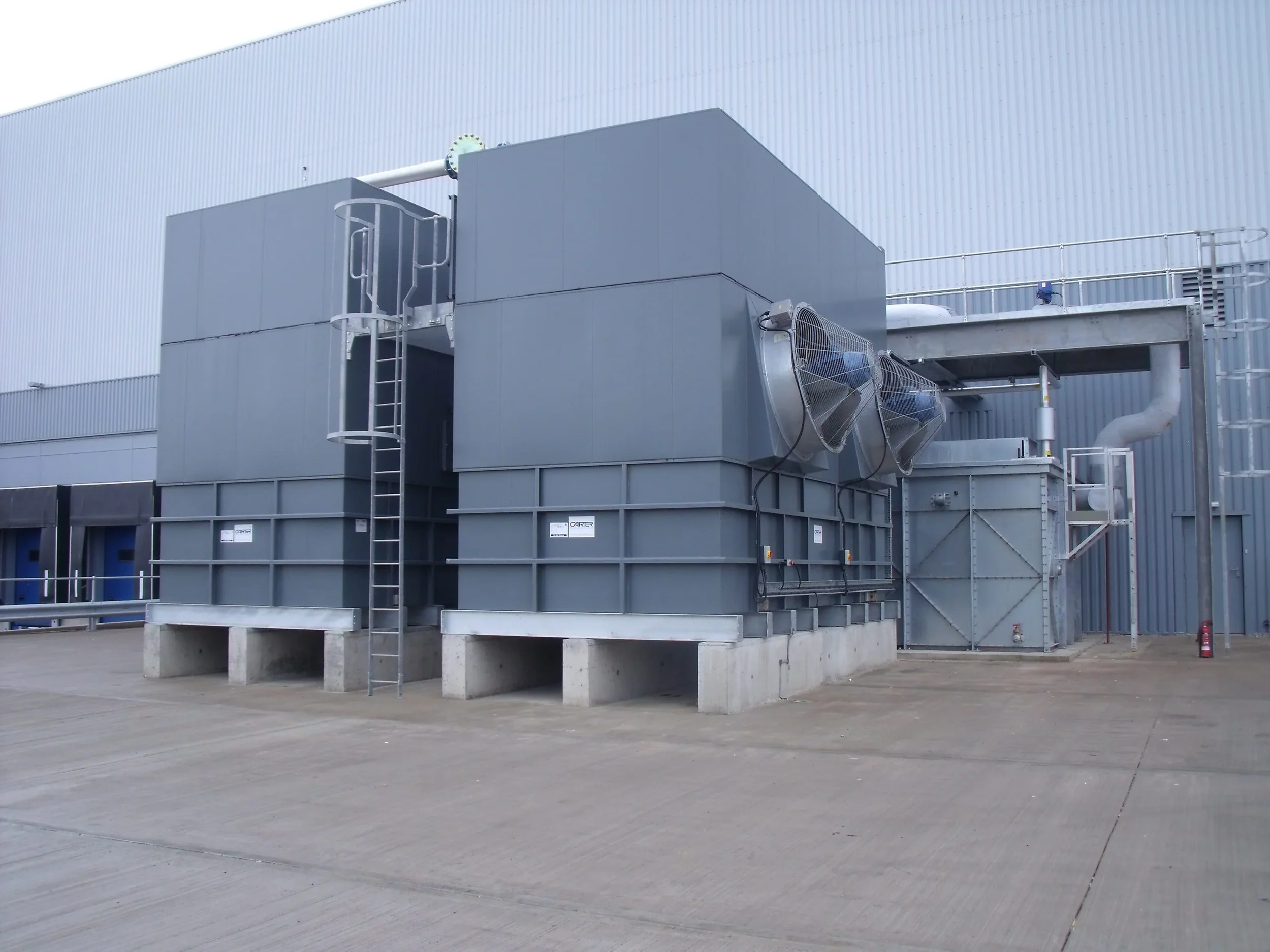
Cooling Tower Problems Increase Energy, Water and Maintenance Costs
Open recirculating cooling-tower systems constantly encounter mineral concentration, oxygen, airborne contaminants and warm operating conditions. When these conditions are not effectively controlled, scale can insulate heat-transfer surfaces, corrosion can shorten equipment life, and biological growth can create deposits that restrict performance. The result is a condenser-water system that must work harder and requires more frequent intervention.
Common Cooling Tower Warning Signs
If these problems continue despite an existing treatment program, the issue may not be a lack of effort. The treatment approach may not be controlling the physical and electrical conditions that allow deposits and deterioration to begin at equipment surfaces.
The SFS Solution, a Physics-Based Protection for Cooling Towers and Condenser-Water Systems.
Scale Free Systems takes a different approach to cooling tower water treatment. SFS applies engineered physical control at the equipment level to influence the conditions associated with mineral adhesion, corrosion and biological activity. Instead of focusing only on repeatedly altering the water, the system is designed to protect the surfaces where cooling-tower problems develop.
Scale Control
SFS is designed to reduce the ability of dissolved minerals to bond to equipment surfaces and form hard insulating deposits. Keeping condenser tubes and other heat-transfer surfaces cleaner supports more efficient heat rejection and can reduce the maintenance associated with mineral buildup. The system may also support the gradual release of existing scale over time, subject to site conditions and system monitoring.
Corrosion Control
Cooling towers continuously expose metal components to water, oxygen and changing operating conditions. SFS is engineered to control the electrical activity associated with corrosion initiation, helping facilities reduce metal loss, protect piping and equipment, and extend the useful life of the condenser-water system.
Biological Control
Warm, wet cooling-tower environments can support bacteria, algae and biofilm. These deposits can interfere with heat transfer, contribute to under-deposit corrosion and increase cleaning demands. SFS uses controlled system conditions and targeted ionization where required to help inhibit biological growth as part of the facility’s broader cooling-tower water-management and maintenance program.
How Scale Free Systems Works on a Cooling Tower
evaluate the Existing System
1
SFS reviews the cooling-tower configuration, condenser-water loop, equipment materials, operating conditions, water use, maintenance history and the specific problems affecting performance.
Engineer the Application
2
System components are selected and configured for the facility’s equipment and operating requirements. The solution is designed around the system—not sold as a one-size-fits-all water device.
Control Conditions at the Equipment Level
3
The installed SFS equipment applies monitored physical control to influence mineral adhesion, corrosion-driving electrical activity and biological conditions throughout the treated loop..
Monitor and Maintain Performance
4
Ongoing service and system monitoring help confirm operation, identify changing conditions and keep the equipment protection program aligned with facility goals.
Benefits of SFS Cooling Tower Water Treatment
Cleaner Heat-Transfer Surfaces
Control mineral adhesion and biological deposits that can interfere with heat rejection and condenser performance.
Lower Maintenance Demands
Reduce the need for repeated scale removal, deposit cleaning, chemical-feed adjustments and reactive service caused by persistent system problems.
Reduced Water and Chemical Dependency
Depending on system design, water quality, operating conditions and facility requirements, SFS can help reduce excessive blowdown, water use and reliance on continuously dosed chemical treatment.
Improved Operating Efficiency
Cleaner equipment surfaces can help the cooling tower and connected chiller reject heat more effectively, reducing avoidable energy waste.
Longer Equipment Life
Controlling scale and corrosion helps protect piping, heat exchangers, condenser tubes and other capital equipment from premature deterioration.
More Sustainable Operation
Lower water consumption, reduced chemical handling and fewer harmful downstream by-products can support operational and environmental goals.
A Different Approach to Cooling Tower Water Treatment
SFS should not be described only as “chemical-free.” It is a physics-based equipment-protection system that happens to reduce or avoid continuous chemical dosing where the engineered application and facility requirements allow.
| Conventional Program Focus | Scale Free Systems Focus |
|---|---|
| Continuously adjusts water chemistry | Applies physics-based control at equipment surfaces |
| Reacts to changing water conditions through dosing | Controls physical and electrical conditions associated with equipment deterioration |
| Performance depends heavily on dosing, calibration and water stability | Engineered system components provide measurable, monitored control |
| May require chemical storage, handling and discharge | Helps reduce chemical dependency and downstream by-products |
| Treats the circulating water as the primary target | Treats the equipment and heat-transfer surfaces as the primary target |